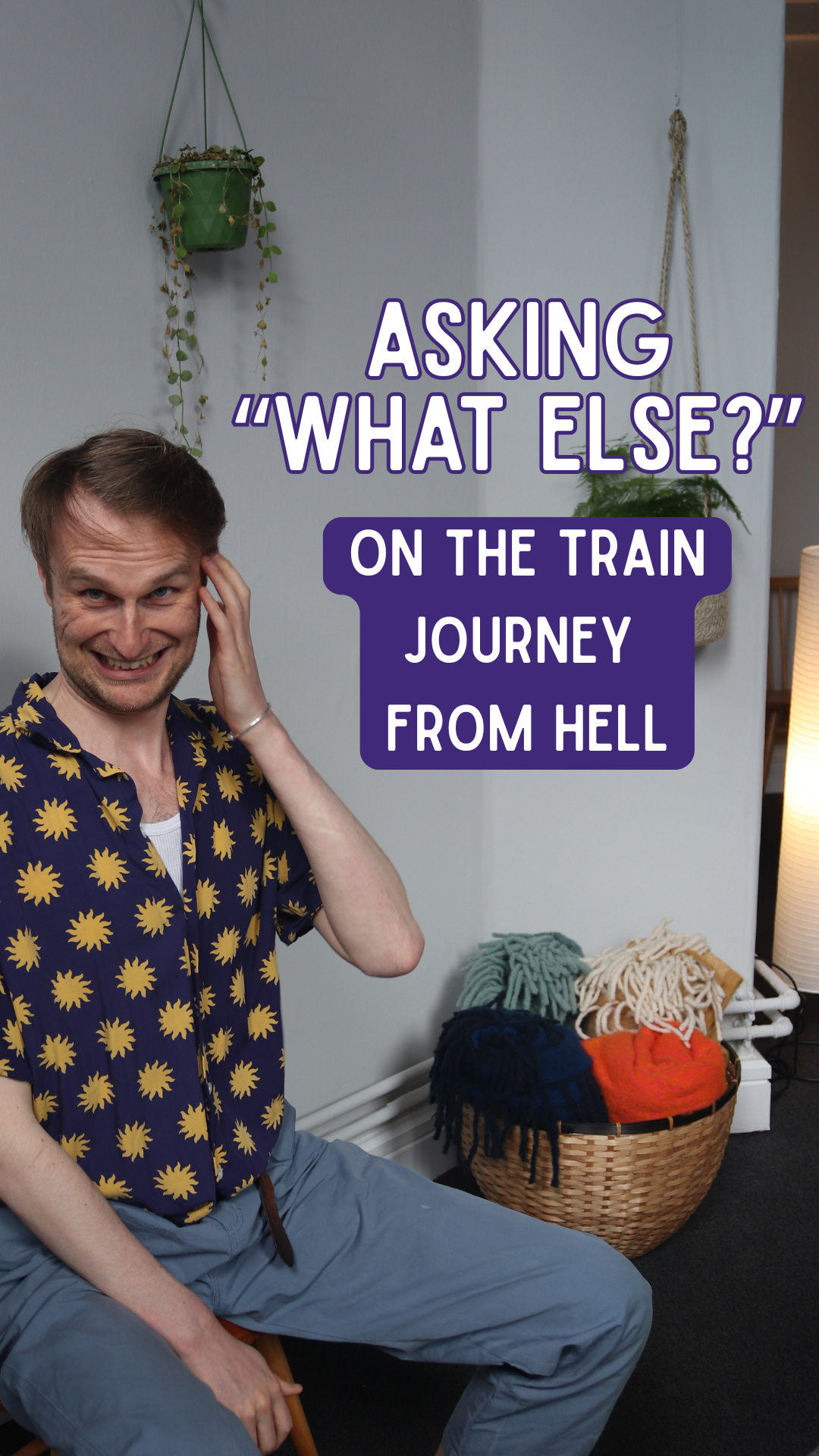
I’ve just had two train journeys between Glasgow and London that felt (and let’s not go crazy here) miraculous. Not because it was my first experience on a train and I couldn’t believe humans could move so fast without their hair falling out. Instead, they were miraculous because they gave me two very different opportunities to experience something I spend a lot of time exploring through the Alexander Technique.
What happens when we stop trying to control our experience.
The power of cultivating curiosity about ‘what is happening’.
If you’d prefer to hear these reflections in a rambly audio/visual format, scroll straight to the bottom!
This trip to London started with me flinging myself onto a commuter train going in the wrong direction, going away from Central station, as opposed to towards it. This type of situation is not uncommon for me so the cataclysmic sinking feeling that washed over me felt comfortingly familiar. My mind very quickly arranged itself into its habitual panic position, gleefully constructing the story of how everything was going to go wrong and I was The Worst.
Just before getting on this train, I had been teaching an Alexander Technique workshop in which we had been exploring the question, "What else?"
For instance:
What else are you noticing?
What else is happening?
What else can you hear?
What else is available when you stop assuming that the first thing you notice is the whole story?
So, sitting on this train going in the wrong direction, I found myself trying to apply the same question to my current catastrophe. Instead of getting completely lost in the thought that I was going to be late, I began to ask myself “what else is happening?”. What was happening with my breathing? What was the floor like? What was happening at this moment, and how much could I change the situation? The answers were 1. I’m not. 2. Lava. 3. The chair is happening to me. 4. Nothing.
In asking these questions I could acknowledge that there was very little I could actively influence in the external world to change my situation. I couldn't make the train go any faster or indeed backwards and clenching my little angry fists wasn’t going to change that fact. However I was in control of the aperture of my attention. I could choose what to focus on, and how pin-hole tightly I was clenching my attention upon it. In other words I could choose to open myself up to the environment around me instead of shutting down. In asking “what else is happening?” I could encourage myself to be available to the potential of the world.
As luck would have it, before getting on this train I had started listening to an episode of Simon Sinek’s podcast A Little Bit of Optimism in which he was interviewing Ellen Langer. Ellen Langer is a Harvard professor who is colloquially known as the ‘mother of mindfulness’ and in this podcast they discussed the difference between mindfulness and mindlessness. One of the things that struck me was her description of what happens when we stop noticing possibilities - when we convince ourselves that things are fixed, and that there is nothing else available to us. This podcast was serendipitously the perfect accompaniment to making a stressful mistake.
In real-time Ellen Langer was inadvertently reinforcing to me why asking “What else?” is so powerful. In asking a question such as "What else?", we interrupt the patterns of certainty and habit that dictate how we perceive the world and invite in the possibility that things can change and be different. It doesn't mean pretending that everything is fine or forcing ourselves to think positively, it simply creates a little bit more space around what we think we know.
I’m sure you’ll be pleased to hear that I eventually made the London train. (Hurrah!). However my story doesn’t end there! Miraculously, the rest of that four-and-a-half-hour journey was unprecedentedly enjoyable and (dare I say it?!) mindful. I usually become inconsolably restless at around the 3 hour mark on these journeys and have learnt to travel with a bulging inventory of activities and snacks to sooth myself when I become frustrated. However this journey was remarkably stress free.
I've recently started wearing hearing aids which are great but have made the world much louder and, at times, sonically stressful. Busy trains are famously noisy, however, rather than thinking, "God, it's so loud," I started asking myself, "What else am I hearing?" In asking this question I found that the quality of my attention changed. It seemed as if the amorphous cacophony of the train became more 3 dimensional and almost symphonic. I could pick out the voices in the carriage in relation to the rhythm of the tracks surrounded by a periphery of smaller textural sounds. The world became interesting and manageable as opposed to stressful and oppressive, the more I slowed myself down.
My return journey from London to Glasgow gave me a very different example of this.
I decided to use this journey to do some gorgeous contemplative writing about how to live a happy and peaceful life. Unsurprisingly, the jostling train made hand-writing extremely challenging. Undeterred I gripped my pen, rammed my tongue against the roof of my mouth and battled onwards. I was very quickly furious with trains, pens, and everything else in the world and realised that the goal I had set myself was impossible and I was defeated.
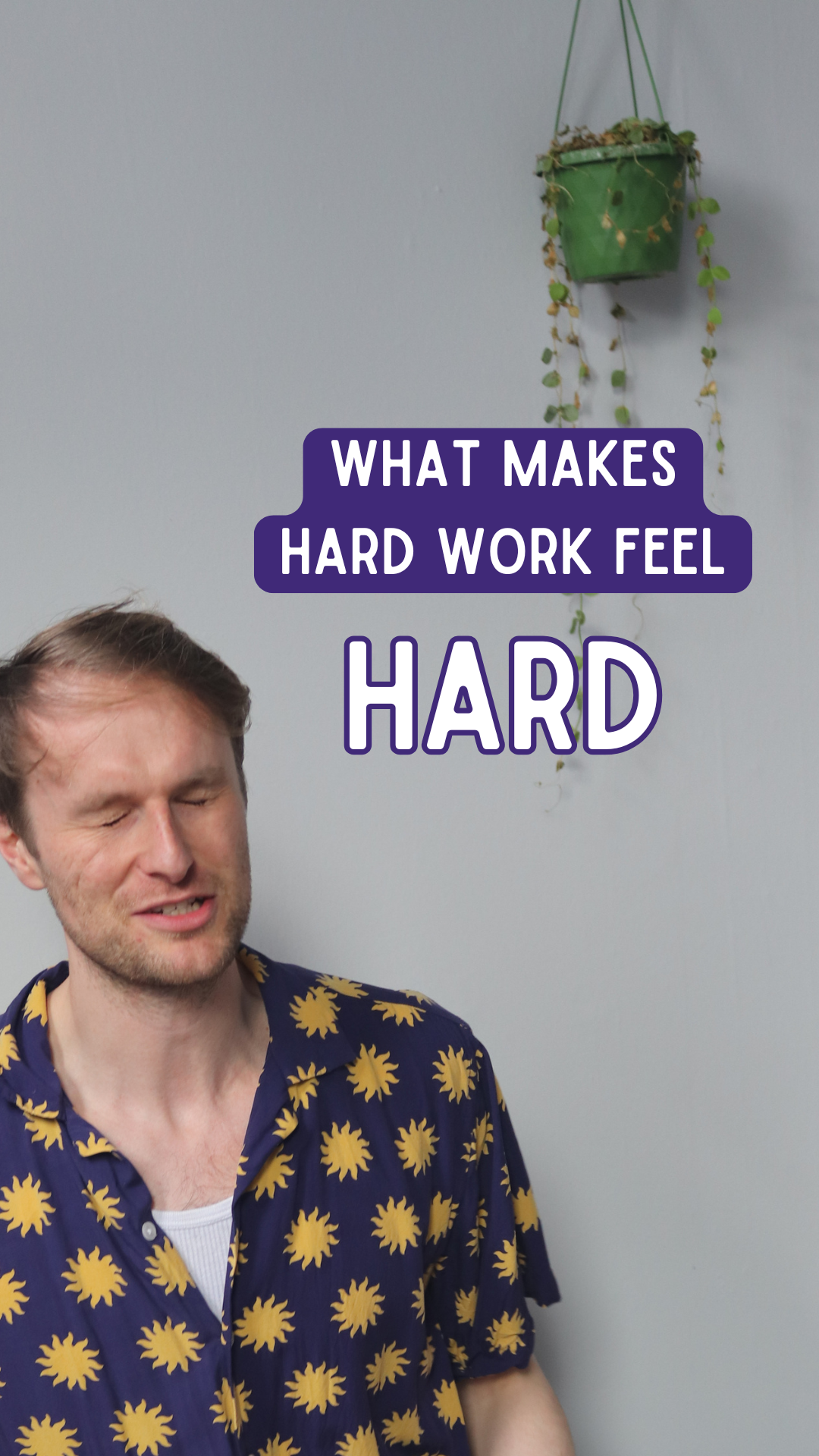
And yet, the situation did afford me the opportunity to wonder about hard work. Namely, is something hard because the thing itself is difficult, or because I am working hard at it?
This question asks whether I experience a task as difficult because it is inherently challenging or because I am doing the task with a huge amount of physical effort. In this case, I met the task of ‘stabilising my pen against the motion of the train’ by gripping onto the pen and onto myself. However, no matter how hard I tried this approach wasn’t working.
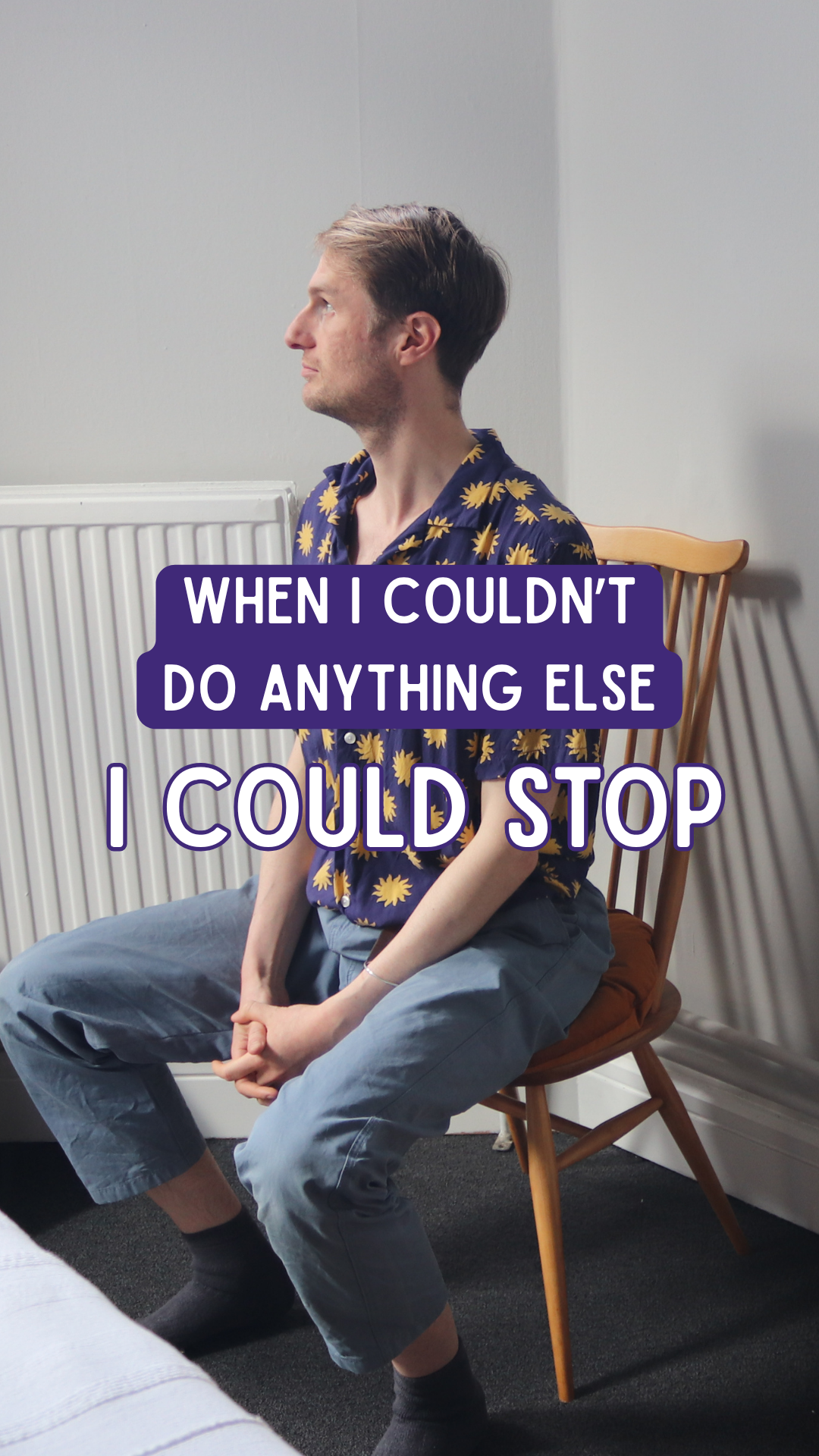
Though there may well be a clever hack for writing free hand on a train, I have yet to discover it. So I put the pen down, took a break and allowed myself to breathe. To be perfectly honest, giving up was annoying and I felt like a failure. I was sure that better AT teachers than me would be able to write free and easy long hand on even the bumpiest of trains. However I had the question “what else is happening” in my back pocket. So while this disappointment was real and massive, in changing the aperture of my attention and opening up to the world it didn’t engulf my whole experience. Instead it could sit in relation to the world around me, and my breath. This allowed space for other ideas to filter in. Such as, why not write in a stable environment that isn’t travelling so fast you are worried your hair is going to fall out…
To conclude, the Alexander Technique invites us to work smarter, not harder. It doesn’t forbid us from ever being tense, frustrated or anxious but instead encourages us to recognise our emotions. In asking “what’s happening?”, “what else is happening?” and “can it be easier?” AT asks us to consider the reflexive relationship between ourselves and to the world around us.
THIS is why I love the Alexander Technique. For me, AT isn't about learning a particular way to sit or stand, but cultivating a more resonant relationship with the world can lead to a more vibrant life.
As promised here is the less coherent, but arguably more entertaining version of this story - a trilogy of videos [in 4 parts]